> For the complete documentation index, see [llms.txt](https://docs.zenml.io/llms.txt). Markdown versions of documentation pages are available by appending `.md` to page URLs; this page is available as [Markdown](https://docs.zenml.io/pro/core-concepts/teams.md).
# Teams
Learn about Teams in ZenML Pro and how they can be used to manage groups of users across your organization and workspaces.
ZenML Pro introduces the concept of Teams to help you manage groups of users efficiently. A team is a collection of users that acts as a single entity within your organization and workspaces. This guide will help you understand how teams work, how to create and manage them, and how to use them effectively in your MLOps workflows.
## Understanding Teams
Teams in ZenML Pro offer several key benefits:
1. **Group Management**: Easily manage permissions for multiple users at once.
2. **Organizational Structure**: Reflect your company's structure or project teams in ZenML.
3. **Simplified Access Control**: Assign roles to entire teams rather than individual users.
## Creating and Managing Teams
Teams are created at the organization level and can be assigned roles within workspaces, similar to individual users.
To create a team:
{% stepper %}
{% step %}
**Go to the Organization Settings**
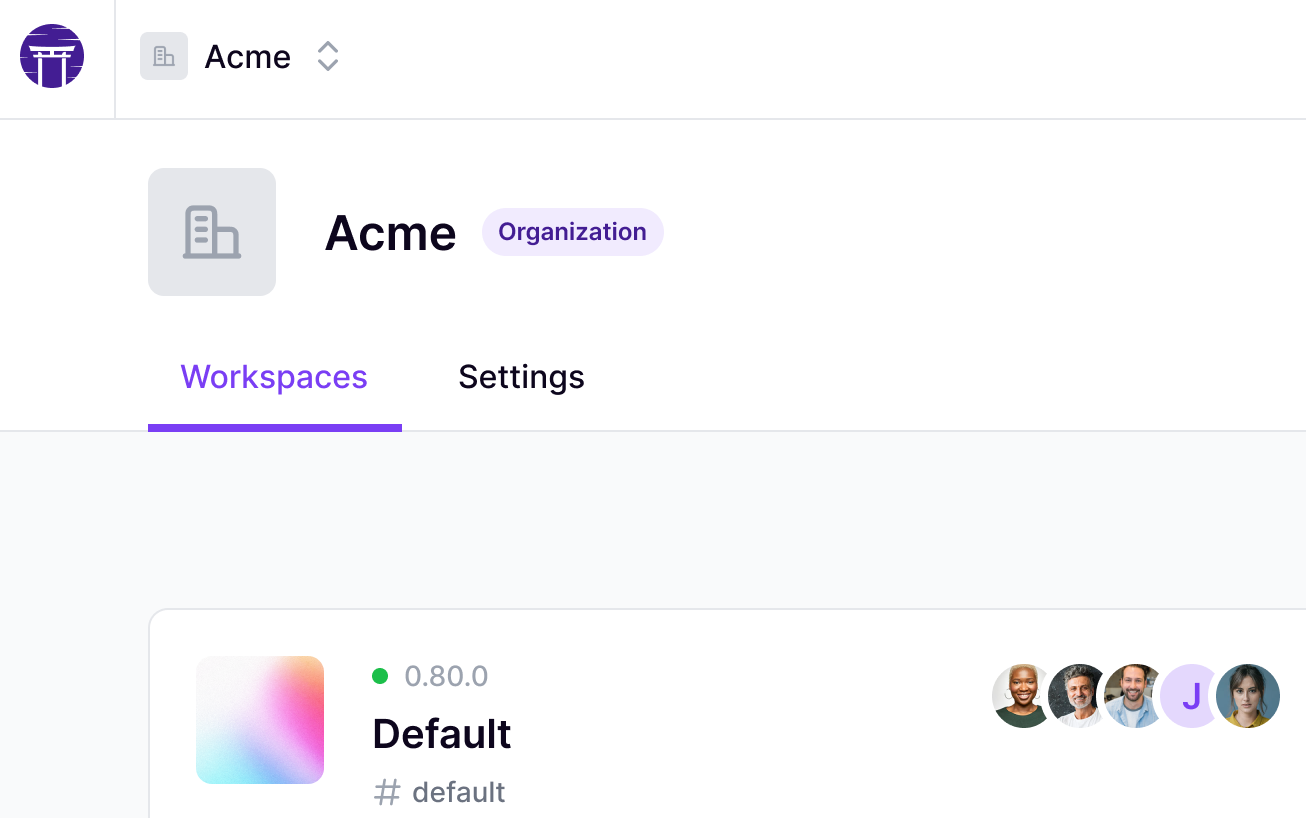
Click on the **Settings** tab from your **Organization** page.
{% endstep %}
{% step %}
**Click on the Teams tab**
Go to the **Members** section from the sidebar and select the **Teams** tab.

{% endstep %}
{% step %}
**Add a New Team**
Use the **Add team** button to add a new team.
When creating a team, you'll need to provide:
* Team name
* Description (optional)
* Initial team members
{% endstep %}
{% endstepper %}
## Adding Users to Teams
To add users to an existing team:
{% stepper %}
{% step %}
Go to the **Teams** tab in **Organization** settings
{% endstep %}
{% step %}
Select the team you want to modify
{% endstep %}
{% step %}
Click on **Add Members**
{% endstep %}
{% step %}
Choose users from your organization to add to the team

{% endstep %}
{% endstepper %}
## Assigning Teams to Workspaces
Teams can be assigned to workspaces just like individual users. To add a team to a workspace:
{% stepper %}
{% step %}
Go to the **Workspace Settings** page
{% endstep %}
{% step %}
Click on **Members** tab and click on the **Teams** tab.
{% endstep %}
{% step %}
Select **Add Team**
{% endstep %}
{% step %}
Choose the team and assign a role

{% endstep %}
{% endstepper %}
## Team Roles and Permissions
When you assign a role to a team within a workspace, all members of that team inherit the permissions associated with that role. This can be a predefined role (Admin, Editor, Viewer) or a custom role you've created.
For example, if you assign the "Editor" role to a team in a specific workspace, all members of that team will have Editor permissions in that workspace.

## Best Practices for Using Teams
1. **Reflect Your Organization**: Create teams that mirror your company's structure or project groups.
2. **Combine with Custom Roles**: Use custom roles with teams for fine-grained access control.
3. **Regular Audits**: Periodically review team memberships and their assigned roles.
4. **Document Team Purposes**: Maintain clear documentation about each team's purpose and associated projects or workspaces.
By leveraging Teams in ZenML Pro, you can streamline user management, simplify access control, and better organize your MLOps workflows across your organization and workspaces.
---
# Agent Instructions
This documentation is published with GitBook. GitBook is the documentation platform designed so that both humans and AI agents can read, navigate, and reason over technical content effectively. Learn more at gitbook.com.
## Querying This Documentation
If you need additional information that is not directly available in this page, you can query the documentation by asking a question.
Perform an HTTP GET request on the following URL with the `ask` and `goal` query parameters:
```
GET https://docs.zenml.io/pro/core-concepts/teams.md?ask=&goal=
```
`ask` is the immediate question: it should be specific, self-contained, and written in natural language.
`goal` is what the user is ultimately trying to achieve, the reason they need the answer. Sharing it helps GitBook give you a better, more relevant answer. A goal is most helpful when it describes the outcome the user wants rather than restating the question. For example, with `ask=how do I create an API token`, a goal like `automate deployments from our CI pipeline` lets GitBook tailor the answer to that use case.
The response will contain a direct answer to the question and relevant excerpts and sources from the documentation.
Use this mechanism when the answer is not explicitly present in the current page, you need clarification or additional context, or you want to retrieve related documentation sections.